Author Archives: Ken Ekechukwu

Combining atherectomy and angioplasty to heal diabetic foot ulcer Ken U. Ekechukwu, MD, MPH, FACP

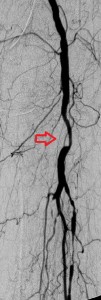
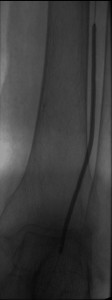
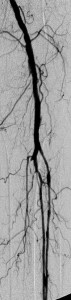
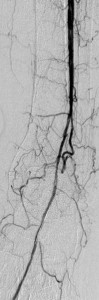
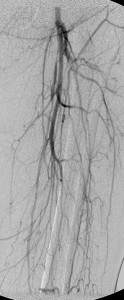
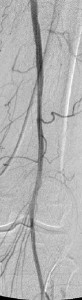
MO2080391_pop_beforeMO2080391_leg_before MO2080391_footbefore
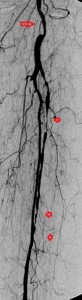
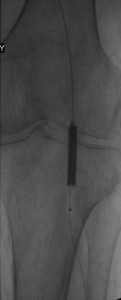
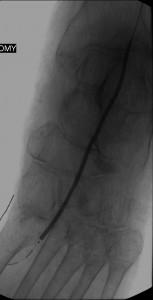
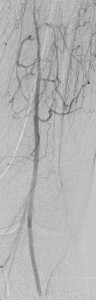
202080391_popa_during MO2080391_leg_during MO2080391_foot_during
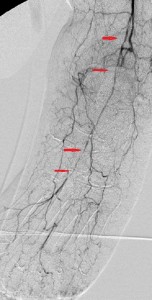
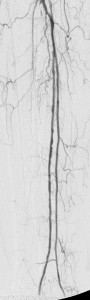
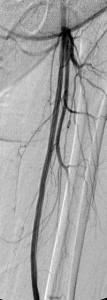
MO2080391_legandpop_after MO2080391_leg_after MO2080391_foot_after


Diabetic foot ulcers are frequently difficult to treat for a number of reasons: diminished ability of the body to fight infections and heal; polymicrobial colonization of wounds; poor glycemic control; neuropathy and vasculopathy. Vasculopathy occurs at visible and occult levels and is a frequent reason for lost tissue in limbs and ultimately limb amputation. Primary care givers, podiatrists, and vascular specialists are joined in an aggressive campaign against this problem and the tool box of endovascular specialists is ever swelling with new equipment for tackling this problem. These include instruments that remove plaques (atherectomy), those that liquefy clot (thrombolytics), balloons that dilate stenosed vessels, and, of course, stents that prop vessels open once dilated.

In this patient, a 67 year-old woman with long-standing diabetes, there was a plantar ulcer of her anterior left forefoot that resisted healing despite many noninvasive treatments. Her podiatrist referred her to me and her sonographic and angiographic investigations revealed multiple significant stenoses in her distal left superficial femoral artery (LSFA), left popliteal artery, and her anterior tibial artery. Her posterior tibial artery was occluded and her chief path of blood flow to the left foot was her left peroneal artery. Her arterial paths above the distal left SFA were open and she had stage 3 chronic renal insufficiency. Faced with the dilemma of continuing foot infection and potential limb loss and worsening renal insufficiency following exposure to radiocontrast, she put off endovascular revascularization of the arterial narrowings for sometime, finally caving to pressures from her son.

After instituting strategies to minimize contrast-induced nephropathy, I employed atherectomy of the distal LSFA and popliteal stenoses and angioplasty of the multifocal stenoses of her anterior tibial artery down to the dorsalis pedis artery to restore reasonable flow to her foot that helped the ulcer heal.

Images in the top panel illustrate her disease before the interventions, those in the middle panel illustrate some intraprocedural steps (balloon angioplasty), while those in the bottom panel illustrate improved blood flow to the foot following treatment.

Re-opening total left SFA obstruction Ken U. Ekechukwu, MD, MPH, FACP

 LM2419105_prox_thigh_pre_reversed_image[1]LM2419105_prox_thigh_beforeLM2419105_distal_thigh_before
LM2419105_prox_thigh_postLM2419105_distal_thigh_post

These images belong to a 48-year-old woman with insulin-requiring type 2 diabetes and long history of heavy cigarette smoking, who was referred to my interventional radiology clinic because of new pain in her left foot that substantially limited her life style, associated with color change. Her diabetes was uncontrolled and the pain seemed neuropathic in character, but the arterial doppler ultrasound of her lower limbs (not shown) uncovered insufficient perfusion of her left lower extremity. This was confirmed with computerized tomographic angiography (CTA) of her abdominal aorta with lower extremity runoffs to be due to chronic occlusive disease of her left superficial femoral artery. All the other examined vessels including her leg and pedal arteries were normal.

Faced with 3 possible reasons for her excruciating left foot pain – uncontrolled diabetes, arterial insufficiency, and smoking- I decided to improve her left foot perfusion and her serum glycemic values in addition to assisting her quit cigarette smoking. Puncturing the opposite common femoral artery, I crossed over the aortic crotch to the left external iliac artery and used several devices including a stent-graft, to reopen her diseased left SFA. Her left foot pain and color change quickly resolved and at her last clinic visit for follow up she wore high-heel shoes – a thing she could not do before the intervention. She received prescriptions for Aspirin 81 mg daily, Plavix 75 my daily (6 months) and more help to cease smoking.

The top-row images illustrate her left SFA before treatment, while the lower-row images show the reopened vessel.

Meningioma of the choroid plexus Ken U. Ekechukwu, MD, MPH, FACP

History
This case is a young woman who had a brain MRI because of chronic headache.

Radiologic findings

Choroid plexus menigioma T1_text[1]Choroid plexusmenigiomaT2_text[1]
Choroid plexus menigioma FLAIR_text[1]Choroid plexus meningioma T1 postgad_text[1]

The images are a combination of T1 (before and after gadolinium enhancement), T2, and FLAIR pulse sequences in axial, sagittal and coronal sections of the patient’s brain (not all of the original images are in the monograph).

They reveal a 2cm mass in the trigone of the left lateral ventricle, centered within the choroid plexus. It has intermediate signal intensity on the pre-gadolinium T1WI, is hyperintense on the T2WI and enhances intensely and homogeneously after intravenous gadolinium administration. The mass is round, well-defined, has no mass-effects and does not invade the brain parenchyma. The ventricles are not dilated. The remainder of the brain is normal.

Differential diagnosis
1. Complicated choroid plexus cyst
2. Lymphoma
3. Metastasis
4. Vascular malformation
5. Choroid plexus papilloma
6. Choroid plexus carcinoma

Discussion

One of ten neoplasms of the central nervous system occur in the ventricles and half of these masses in adults (one quarter in children) occur in the lateral ventricles. Their differential diagnosis hinges heavily on their location and the age of the patient; their imaging characteristics offer little help.

In an adult the common masses found in the trigone of the lateral ventricle include: choroid plexus cyst, meningioma, lymphoma, metastasis and vascular malformation; papilloma and carcinoma of the choroids plexus are not common.

Cysts of the choroid plexus have epithelial lining and contain fluid whose signal intensity parallels that of the CSF unless, and unlikely, there is complicating hemorrhage or infection. Encysting infections of the central nervous system such as neurocysticercosis and ecchinococcosis may also occur in the ventricles but do so, usually, with characteristic histories. The mass in this case, on the T2WI, is homogenously hypointense to CSF; old blood would behave thus but should be bright on T1WI as well. A cyst is, therefore, unlikely.

Lymphoma and metastasis are unlikely in the absence of extra-cranial disease and this site is unusual for primary central nervous system lymphoma.

A vascular malformation can occur in this locale at any age but would reveal heterogeneity due to flow voids and calcifications. It may also be possible to identify large abnormal vascular channels. The mass in this case has no such appearances.

Choroid plexus papilloma (CPP) is commoner in children than in adults and in adults is more likely to occur in the fourth ventricle. The lesion is usually associated with enlargement of all the ventricles either due to increased CSF production or due to disturbed CSF drainage. CPP, on MRI, is iso-intense on T1, iso- to slightly hyperintense on T2, and enhances intensely after gadolinium injection. There may be ‘drop metastasis’ and limited parenchymal edema, which does not however indicate malignancy. Our patient’s age, the location of the tumor, and its imaging characteristics make choroid plexus papilloma unlikely.

Carcinoma of the choroid plexus is uncommon in adults, occurring primarily in children 2 to 4 years old (median age 26 months). There is usually hydrocephalus and there may be parenchymal invasion. Though it may possess imaging features similar to the mass in this case, it is unlikely, however, based on the patient’s age.

Therefore, from the foregoing in addition to its signal behavior, the mass in question is most likely a meningioma.

Meningiomas are the most common non-glial primary brain tumors and the most common intracranial extra-axial (outside the brain or spinal cord parenchyma) tumors of the central nervous system in adults (15% to 20% of all primary brain tumors are meningiomas).

They arise from the meningothelial cells of the CNS called arachnoid “cap” cells and often are benign tumors classified, histologically, into syncytial, fibrous, transitional and angioblastic forms based on the proportions of fibrous tissue, blood vessels and cells they contain. Occasionally, fine, granular calcifications are present in them, the psammomatous meningiomas. Intraventricular meningiomas are uncommon and arise from the stromal cells of the choroid plexus or cells of the tela choroidea.

Because there is little concordance between disease prognosis and the histologic variations I mentioned above, the World Health Organization classification system (which enjoys this merit) is favored more by many neuropathologists: typical (88-94%), atypical (5-7%) and anaplastic (malignant) meningiomas (1-2%).

Meningiomas are rare in children (often in atypical location and of atypical histology), commoner in women than men, multiple in 1 to 9% of instances and may be a part of neurofibromatosis type 2 (usually when multiple).

Meningiomas can grow in the brain or the spinal cord. In the former, the common sites of occurrence are the parasagittal area, the convexity, the sphenoid ridge, the olfactory grove, the parasellar region and the posterior cranial fossa; rare occurrences in the ventricles (as in our case), the pineal region, optic nerve, the nose, sinuses and the skull are documented.

The tumors do not usually cause symptoms but their presentation varies and depends on their locations: seizure, hemiparesis, visual field defects, cranial nerve palsies, obstructive symptoms and anosmia, to mention a few. Both benign and malignant meningiomas may metastasize though, rarely.

I doubt that our patient’s chief complaint  (headache) was due to the intraventricular mass, though it is possible. I do not know what became of her because I lost her on follow-up.

Bibliography

1.Jelinek J et al: Lateral ventricular neoplasms of the brain: differential diagnosis based on clinical, CT, and MR findings, AJR 155:365-372, 1990
2.Sheporaitis L, et al: Radiologic-Pathologic correlation of intracranial meningioma, AJNR 13: 29-37, 1992.


Left subclavian-vertebral steal syndrome Ken U. Ekechukwu, MD, MPH, FACP

PSxxx7724_LSCAstenosis_b4stenting[1]PSxxx7724_LSCAstenosis_b4stenting_reversedimage[1]
PSxxx7724_LSCAstenosis_at stenting[1]PSxxx7724_LSCAstenosis_poststenting[1]

Key: LVA, left vertebral artery; LSCA, left subclavian artery; LCCA, left common carotid artery; LIMA, left internal mammary artery.

The vertebral artery is the first branch of the subclavian artery and supplies the hindbrain, while the internal mammary artery is its second branch and courses behind the anterior chest wall to anastomose with the ipsilateral inferior epigastric artery in the rectus sheath; it offers a natural route for lower body perfusion in obstructive diseases of the thoracic aorta or is grafted to a coronary artery in coronary artery bypass interventions (left internal mammary artery). In most people the left subclavian artery arises from the posterior aortic arch, while the right subclavian artery arises from the brachiocephalic trunk, itself the first branch of the aortic arch. A patient may develop vertebrobasilar insufficiency due stenosis or occlusion of the brachiocephalic or subclavian artery, called vertebral-subclavian syndrome. Similarly, symptoms of coronary hypoperfusion may develop in those in whom their left internal mammary artery (LIMA) is grafted to a coronary artery for coronary bypass surgery.

In vertebral-subclavian steal syndrome, because the increased demand for blood that attends active use of an upper extremity is not met due to critical stenosis or occlusion of the brachiocephalic trunk or the subclavian artery, blood is short-circuited from the ipsilateral vertebral artery reducing hindbrain perfusion. The patient may experience such hindbrain symptoms as dizziness, nausea, disequilibrium and vomiting that improve by resting the limb. Similarly, in coronary-subclavian syndrome blood is shunted from the coronary artery to which the LIMA is grafted, causing coronary syndrome involving the short-changed myocardial territory that improves with resting the left upper limb.

The commonest cause of large-vessel obstruction in the upper extremities is atherosclerosis and the left subclavian artery is affected by stenotic/occlusive disease 8 to 10 times more than the right subclavian artery. In the past such disease was solely managed by surgery – direct reconstruction via endartherectomy or aortic arch bypass – but with improved endovascular techniques,  it is increasingly addressed endovascularly. Although few studies have compared endovascular stent-supported subclavian revascularization with aortic bypass interventions, the initial clinical success of the former is seen in nearly 100% of stenotic lesions and 60% to 100% of occlusions. Primary patency at 1 year has been reported in 91% to 100%, dropping to 82% to 86% at 3 years and 77% at 5 years.

The 4 images you see above were recorded by me during primary stenting of irregular atherosclerotic stenosis of the left subclavian artery in a 54-year-old Hispanic female who was referred to my interventional radiology clinic for management of the stenosis. She had presented to her primary care physician with symptoms of hindbrain ischemia upon using her left upper limb and earlier workup confirmed left subclavian arterial stenosis. The 2 top images illustrate the character and severity of her disease, the first image in the bottom row shows the process of balloon-expandable stenting of the disease, while the 2nd image in the bottom row reveals complete elimination of the stenosis and reappearance of the left vertebral and internal mammary arteries, which were invisible on the pre-intervention angiograms reflecting the severity of the stenosis.

Lipoblastomatosis Ken U. Ekechukwu, MD, MPH, FACP

History

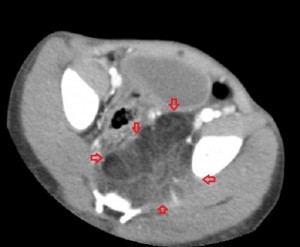
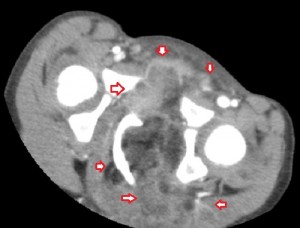
A mother brought her 2-year-old son to the hospital because she had noticed that his left buttock was larger than his right buttock. There was no antecedent trauma and the mass was painless. According to his mother, the child had been well until the mass appeared, but except for its unsightliness, it did not border the child. He was attended by a pediatric surgeon who noted an otherwise healthy child and ordered cross-sectional imaging that revealed a fatty solid lesion centered in the boy’s left ischiorectal fossa and perineum but infiltrated the deep pelvis and the left gluteal muscles. He watched the child closely over 2 years and partially debulked it because of continued growth. The child did well but the mass continued to grow requiring near-complete excision when he turned 4. Except for gait imbalance and some fecal and urinary incontinence the child did well and is still being seen at the pediatric surgery clinic.

Radiologic Findings
BM9656_kubBM9656_CT_AP_midpelvisBM9656_CT_AP_lowerpelvis
BM9656_MR_axialT1[1]BM9656_T2FS_axial[1]BM9656_T1_coronal[1]BM9656_T2_sagital[1]

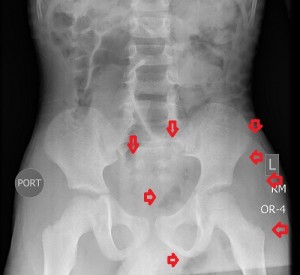
The 1st image in the top panel is a plain radiograph of the child’s pelvis depicting enlargement of the left hemipelvis and shift of the pelvic structures to the right due to a poorly-revealed mass with patches of fat in it. The 2nd and 3rd images in the top panel are CT images of the pelvis and they show a multilobulated mass centered in the left ischiorectal fossa and perineum infiltrating the lower retroperitoneum, medially, and the left gluteal muscles, laterally. Its medial extent is well-defined and similar in attenuation to subcutaneous fat, while its lateral extent is less defined and of soft-tissue attenuation. The mass compresses the rectum while displacing it to the right and pushes the urinary bladder upwards. There is no bony invasion or destruction.

All the images in the lower panel are MR images (from left to right, axial unenhanced T1; fat-suppressed T1 post-gadolinium; coronal T1 without fat suppression; fat-suppressed sagittal T2). They show the extent of the disease better than CT and confirm that it is primarily lipomatous with little soft-tissue content. It infiltrates most of the left gluteal muscles, occupies the entire left perineum and ischiorectal fossa, and extends proximally in the retroperitoneum to the level of the sacral promontory.

Radiologic Diagnosis: Liposarcoma


Pathologic Findings

BM9656_Gross[1]OLYMPUS DIGITAL CAMERAOLYMPUS DIGITAL CAMERA

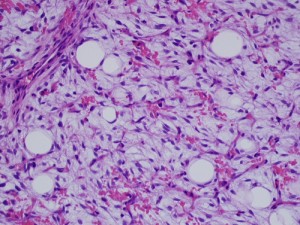
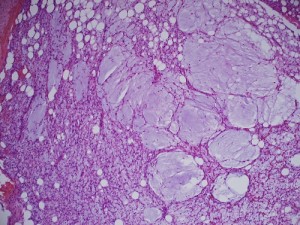
Gross image (far left image) shows a multinodular reddish and pinkish fatty mass, while the low-power and high-power microscopic images (middle and far right images) reveal a mucoid matrix with lipoblasts at different maturational stages (spindle-shaped mesenchymal cells to univacuolated cells with compressed nuclei).

Pathologic diagnosis: Lipoblastomatosis.


Discussion

Current World Health Organization Committe for the Classification of Soft Tissue Tumors organizes benign lipomatous disorders of soft-tissues into 9 classes of disease: lipomas, lipomatosis, lipomatosis of nerves, lipoblastoma and lipoblastomatosis, angiolipoma, myolipoma, chondroid lipoma, spindle-cell lipoma, and hibernoma. These tumors are unified by the presence of fat in them though mixed with varying amounts of other mesenchymal derivatives (blood vessels, muscle, cartilage, fibrous tissue, etc.). Lipoma, at 50%, is the commonest of them.

Benign lipomatous tumors of soft tissues vary in prevalence, presentation, and management and rely for their prepathologic diagnosis on the ability of an imaging modality to show their fat content. They can also affect bones, joints, and tendon sheaths, but a discussion of all benign lipomatous tumors of musculoskeletal tissues is beyond the scope of this writing. We will dwell on lipoblastoma and lipoblastomatosis.

Lipoblastoma is a rare benign tumor of embryonal white fat that occurs in infants and young children. It is believed to consist of embryonal lipoblasts growing in a myxoid matrix, most cases (nearly 90%) occurring in children below 3 years; it is uncommon in those aged 10 years and above. Lipoblastoma is a fast-growing tumor, typically painless and may show propensity to regress and involute with time. It occurs 3 times more frequently in males than in females.

A distinction is made between lipoblastoma and lipoblastomatosis, the former a circumscribed lesion confined to the superficial tissues, and the latter an infiltrative disease of the superficial tissues and their underlying musculature, like our patient. Lipoblastoma represents 70% of this form of lipomatous soft tissue tumor, while lipoblastomatosis represents 30%. As stated, the natural history of these tumors is to regress and there are reports of lipoblastomas regressing over a 5-year period and lipoblastomatosis over 1 year, but occasionally, as in our patient, growth is so rapid as to necessitate early debulking surgery. Neither has a malignant potential.

These tumors cause symptoms by the effects they have on local tissues. For example, lipoblastomas, which tend to occur in upper extremities, neck region, chest wall, mediastinum, and the retroperitoneum may cause fever, intermittent airway obstructions, vomiting, anorexia, and abdominal pain. On occasion their only observable effect is swelling or disfigurement of the affected area or region, as in our case.

On gross pathology, lipoblastomas may be red, pink, white, tan, light yellow or yellowish-grey and frequently measure less than 5 cm and are well-encapsulated, while lipoblastomatosis, being infiltrative, tends to be larger and less defined, a point illustrated by this patient. At histology, they show univacuolated or multivacuolated lipoblasts, myxoid stroma, spindled-to- stellate mesenchymal cells, a plexiform capillary network, and mature lipocytes. Ultrastructurally, they consist of cells ranging from perilipoblasts (spindle cells) to mature adipocytes.

The imaging appearance of lipoblastomas and lipoblastomatosis depends on the amounts of fat and myxoid tissue they contain and these tend to vary with age. Tumors richer in fat are lucent on radiography, very echogenic on sonography, low-attenuating on CT, and isointense to subcutaneous fat on all pulse sequences on MRI (as demonstrated by the present case). They do not enhance as much as those rich in myxoid stroma, which are less radiolucent on radiography, iso-attenuating to soft-tissue on CT and, like most soft-tissue tumors, are low- to iso-intense on T1 and hyperintense on T2 on MR imaging. When lipoblastomas contain more myxoid elements they are indistinguishable from liposarcoma, a malignancy, even at histology. However, liposarcoma is so rare in early childhood that when a tumor with histologic features that suggest it is seen in a child less than 2 years old, it is invariably a lipoblastoma, not liposarcoma. Lipoblastomatosis shares similar imaging characteristics to lipoblastoma except that it is more infiltrative and so may be more destructive.

The treatment of both lipoblastomas and lipoblastomatosis is wide surgical resection when they cause symptoms or manifest rapid growth since their natural tendency is to regress. Sometimes a tumor may require several debulkings to achieve remission because there is a 9% to 25% recurrence rate, particularly with lipoblastomatosis because it is infiltrative. In our case, the pediatric surgeon hoped to leverage the tumor’s regressive tendency but intervened because of rapid growth.

Acknowledgement
The gross photograph and microscopic images were provided by Kimiko Suzue, MD, PhD, Assistant Professor, Department of Pathology, Chicago Medical School at Rosalind Franklin University of Medicine and Science,  Chicago, Illinois.