


Author Archives: Ken Ekechukwu

Re-opening a thrombosed left femoropopliteal bypass graft Ken U. Ekechukwu, MD, MPH, FACP

ltfempopbypass_before_1lt fempopbypass_before_2ltfempopbypass_before_3ltfempopbypass_before_4ltfempopbypass_before_5
ltfempopbypass_after_1lfempopbypass_after_2ltfempopbypass_after_3leg_after_4leg_after_5

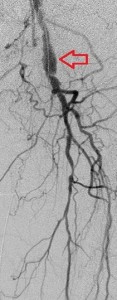
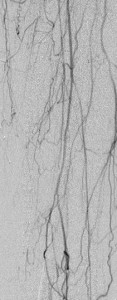
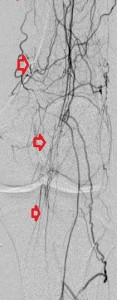
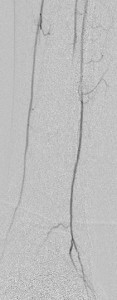
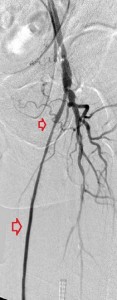
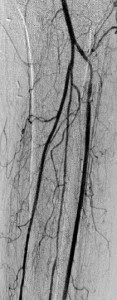
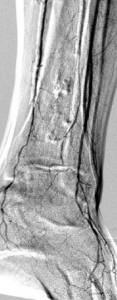
Top panel: Pre-intervention run-off angiogram of the left lower extremity showing, from left to right, irregular left common femoral artery (LCFA) arrowed on the 1st image, absent left superfical femoral artery (LSFA) or any bypass conduit on the 2nd image, sketchy descending collaterals from the left deep femoral (LDFA) that reconstitute a faint shadow of the left popliteal artery, arrowed on the 3rd image. The last 2 images faintly show three-vessel run-off below the left knee. The anterior tibial artery is most opacified, followed by the posterior tibial artery; the peroneal artery peeps through the upper edge of the last image. Note how weakly visible these vessels are due to the poor inflow from above.
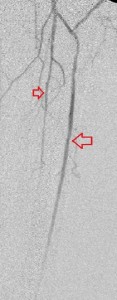
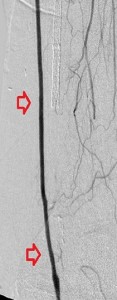
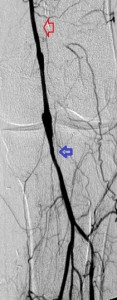
Bottom panel: Post intervention run-off arteriogram of the left lower extremity showing, from left to right, the proximal and distal segments of the re-opened left femoro-popliteal bypass (red arrows on images 1, 2, and 3). Contrast the full-column opacification of the below-knee left popliteal artery, arrowed blue on the 3rd image, and the enhanced visibility of the three-vessel subpopliteal domain to their vestigial appearances on the pre-intervention images, when they were poorly fed through collaterals.

 Arterial bypasses are surgical contructs that connect normal proximal and distal segments of an arterial tree to deliver more blood  distally by avoiding a diseased segment of the tree. The preferred bypass conduit is a patient’s native vein, but when such is unavailable or what is available is unacceptable or insufficient, a synthetic conduit is used. Bypasses may be long or short depending on the length of the arterial obstruction. Their longevity varies and depends on the nature of the underlying arterial disease, the flow of blood into and out of them, the technical challenge in creating them, the skill of the operating surgeon, a patient’s blood pressure, and the nature of the bypass conduit.

Bypasses fail if blood flow through them is restricted by upstream arterial disease or short-circuited through large proximal side trunks; by a poor distal run-off, a diseased pedal arch or a weak, impoverished, or discontinuos link between the two; by hypotension, especially soon after their creation, because this induces slow flow through them and hastens clot formation; synthetic conduits tend to stay open shorter than native veins. Finally, technically-challenging creations or those constructed by inexperienced hands tend to fail quicker than their counterparts.

 Early bypass failure, within 30 days, precipitates acute ischemic symptoms and demands urgent surgical intervention. It frequenctly is due to unattended disease in the inflow or outflow channels, a mechanical error in its creation, hypotension, or problem with the conduit. Later failure causes less dramatic symptoms that demand less speedy intervention and, when it happens within 1 to 2 years of a bypass’ creation is often due to the development of anastomotic intimal hyperplasia. Intimal hyperplasia is physiologic smooth muscle enlargement in the wall of a native vein when it is subjected to high-pressure arterial flow and can be treated with balloon angioplasty. Bypass failure after 2 years is frequently due to progression of the underlying atherosclerosis, either in the inflow or the outflow vessels. There are times, however, when no identifiable cause for a failure exists and this is more prevalent with synthetic conduits.

 When blood flow into or out of a bypass fails, it thromboses and its salvage includes gaining access into it and removing the clot in addition to determining the reason for its failure. Such clot removal may be mechanical, as is frequently the case in acute graft failure, or through thrombolysis, as is the case in later failures. The above images illustrate the later scenario in which the patient presented about 1 year after a left femoropopliteal bypass was fashioned for them. I crossed into the lumen of the bypass conduit from a right common femoral arterial puncture and advanced an infusion cather into it for overnight continuous alteplace infusion following a bolus dose. (I favor 5 to 10 mg of alteplace bolus, followed by continuos infusion at 0.5 mg per hour, in company with fixed unfractionated heparin infusion at 500 units to 600 units per hour after a bolus dose of 3000 units to 5000 units). In this case the bypass proved to be a vein conduit connecting the left common femoral artery, proximally, to the mid popliteal artery, distally, without intimal hyperplasia. The cause of the failure was diminished inflow due to left iliac disease.The final runoff images reveal a three-vessel tibial domain continuous with a near-normal plantar arch.


Carotid Artery Stenting

What is Carotid artery stenting?

The carotid artery is the artery that carries fresh blood from the heart to the neck, the face, and the head including the anterior brain. Two carotid arteries arise from the aorta, the large artery in the chest that comes directly from the left heart; one runs through the right neck, while the other runs through the left. Somewhere close to the angle of the jaw the arteries divide into two unequal branches that carry blood to the front of the brain (the larger artery) and the neck and face (the smaller branch), respectively.[more…]

These arteries, like all arteries in the body, can be narrowed or obstructed by cholesterol-rich material (called atheromatous plaque or simply, a plaque) that grows in their walls due to conditions like hypertension, diabetes, high cholesterol, and smoking. This narrowing, when severe or complete, slows down or shuts off blood flow to the brain causing stoke-like symptoms or actual stroke. Sometimes tiny particles of the plaque break off and travel with blood into the brain to cause stroke.

Stroke can be prevented from occurring in some patients by doing surgery on the narrowed artery (Endarterectomy) to repair it or by widening it with a stent. A stent is cylindrical tube made from metal into whose walls are cut numerous small holes that turn the walls into a mesh. A stent placed across a narrowed or blocked artery keeps it open and reduces the chance of particles of atheroma breaking off to cause a stroke.

How do I prepare for Carotid artery stenting?

You must prepare yourself emotionally for the procedure and gather as much information as you can. Your health care provider will have informed you by now what the procedure entails and has probably discussed its benefits and risks with you. Expect to be asked to take Aspirin and clopidogrel (Plavix) for 3 to 5 days (if you are not already taking them) before the procedure. After the procedure you will take Aspirin for life and Plavix for 3 to 6 months. These medications reduce the chance of clot formation in the arteries or the stent during and after the procedure. You will not be placed under general anesthesia because staying awake during the procedure allows your physician to know when a complication of the procedure occurs, but you may receive light sedation. You will be asked to refrain from eating food or drinking water after the midnight preceding the morning of your procedure and are likely to be advised not to take your antihypertensive medications on the morning of the procedure, if you take any.

How is the carotid artery stented?

Carotid artery stenting is usually performed in an interventional radiology suit (or similar suit) because the operators need x-ray images to guide them during the procedure. After applying a local anesthetic to your groin (or arm if the groins are not suitable), small tubes (the size of spaghetti) and wires will be used to place the stent across the diseased artery. The procedure is tricky and complicated requiring great care and attention to prevent or minimize complications; so do not expect a hurried departure from the hospital.  In the absence of major complications most people will go home the next day.

What are the complications of carotid artery stenting?

The complications of carotid artery stenting are several but occur relatively infrequently in expert hands; operators who have mastered the skills of the procedure have fewer complications than those who have not. The most feared complication is stroke, the loss of neurological function that may be brief with full recovery of lost function within 24 hours (transient ischemic attack or TIA); or it may be minor requiring less than 7 days for incomplete neurological recovery or is associated with a less than four-point increase in the NIHSS (National Institute of Health Stroke Scale) score; or major in which the deficit stays longer than 7 days or is associated with a greater than four-point increase in the NIHSS score. Stroke can occur from plaques travelling downstream into the brain to block arteries or from bleeding into the brain.

Other complications of the procedure include the following:

  1.  Bleeding at the puncture site in the groin or the arm or into the back of the abdomen (retroperitoneal hemorrhage).
  2.  Injury to the punctured artery called dissection, transection or thrombosis that may lead to limb loss.
  3. Dissection of the carotid artery during the procedure.
  4. Contrast-induced neurotoxicity, which presents as a brief loss of vision and is due to crossing of the blood-brain barrier by the radiocontrast (dye) used for the procedure. Its risk is minimized by the use of less concentrated radiocontrast.
  5. Contrast-induced nephropathy, which is renal injury caused by the radiocontrast.

These complications though remediable are avoidable by due diligence and care during the procedure, but sometimes even with meticulous attention to detail things go wrong.

Preparing patients for interventional radiological procedures

Most interventional radiological (IR) procedures are safe and help patients immensely, but sometimes they are associated with complications. Some complications are inherent to the nature of a procedure, while some are not and are preventable by taking some precautions before, during, and after a procedure.  Here, I offer general guidelines to physicians and patients on how to prepare for IR procedures. There are specific preparations that apply to individual procedures. These are usually explained to the patient at the interventional radiology clinic or in their room (if they are hospitalized); such explanation should be part of the process of obtaining an informed consent for a procedure. You may review them at our web site, www.medradclinics.com, or, visit www.sirweb.org/patients for more information.[more…]

Diet, Medications, and Hydration

Although many interventional radiological (IR) procedures are performed with only local anesthesia, a majority require conscious sedation for the patient’s comfort and alleviation of pain and anxiety, while a few require more sophisticated anesthesia. Since the medications used to induce conscious sedation depress respiration and consciousness (and some directly stimulate the vomiting center in the brain stem), administering them to patients with full stomachs is risky since they may vomit and choke themselves during a procedure. It is important then that the stomach is empty when a patient receives conscious sedation. Generally, different meals clear the stomach at different rates, water and other liquids clearing the fastest, while fatty meals clear the slowest; carbohydrates and proteins lie in between, carbohydrates clearing quicker than proteins. Most meals will vacate the stomach by 8 hours.It is for these reasons that patients preparing for interventional radiological procedures are advised to refrain from eating solid meals after the midnight preceding their procedure. They may drink water (and indeed are encouraged to do so in some instances) until 2 hours before the procedure start time.Exposure to radio-contrasts (contrast agents) deserves special mention. Radiocontrasts are chemical agents rich in iodine that are given to patients either by mouth or into a vein to improve the visibility of normal and abnormal tissues in the body when x-rays pass through them. But because abnormal tissues have more blood vessels most of which abnormally ‘leak’ intravenously administered radiocontrast into the tissue interstices, delaying its washout, they stand out in recognition more than normal tissues, the so-called contrast enhancement. This is the reason intravenous contrast enhancement is encouraged in studying such disorders as tumors, infections, inflammations, radiation injuries, post-surgical changes, etc, – situations in which the examiner wishes to leverage or take advantage of the differences in the number and normalcy of blood vessels in diseased and normal tissues to distinguish the two. Such use of radiocontrast is employed in IR in addition to its use in opacifying the lumens of blood vessels when working on them.

Radiocontrasts given by mouth, to a large degree, cause no harm, but those given into the veins can alter renal function in some patients: those older than 60 years; those with existing poor renal function; those who are dehydrated; those with multiple myeloma; and, diabetics. People who belong to one of these groups are at increased risk of contrast-induced nephropathy, a state of diminished renal function following exposure to a radiocontrast. Their risk for this may be reduced by sufficient hydration with normal saline and the administration of such free-radical scavenger as acetylcysteine (Mucomyst) before exposure to the radiocontrast. Of course, it is important to weigh the risks of such exposure against its potential merits before proceeding with a test or procedure; there are moments when doing nothing (masterly inactivity) is wiser and safer than taking an action. Adequate intravenous hydration of a patient before exposure to radiocontrast is second only to no exposure in the prevention of contrast-induced nephropathy.

Diabetic patients on metformin are a special case because the concurrent taking of the drug and the development of renal impairment can cause lactic acidosis. Lactic acid is one of the many products of metabolism excreted by the kidneys. When it exists in excess the condition is called lactic acidosis. Any form of renal impairment will reduce the excretion of metformin and lactic acid leading to type B (non-hypoxic) lactic acidosis. This condition though rare is reported to have a 50% mortality rate. Metformin is a biguanide oral hypoglycemic agent that works by increasing the movement of sugar into glucose-utilizing cells while suppressing the synthesis of sugar in the liver (gluconeogenesis). It is excreted by the kidneys and, like other biguanides, suppresses the action of pyruvate dehydrogenase as well as decreasing the transport of mitochondrial reducing agents. These two actions accumulate pyruvic acid in the cell that is converted into lactic acid.  Since contrast-induced nephropathy is associated with diminished renal function, diabetic patients (who are already at increased risk for contrast-induced nephropathy) taking metformin should switch to non-biguanide oral hypoglycemics or insulin starting on the day of radiocontrast exposure until their blood chemistry taken 48 hours to 72 hours after the  exposure documents normal renal function.

Prophylactic medications

Some complications of interventional radiological (IR) procedures like bleeding at an arterial puncture site, systemic or local skin infection, or acute of delayed thrombosis of a revascularized artery are preventable.

The process of re-establishing blood flow through an occluded artery can be complicated and challenging. It also traumatizes the arterial wall and may precipitate acute re-thrombosis or occlusion of the vessel during or shortly after the procedure. Not only does this jeopardize the interventionalist’s work, it also re-exposes a patient to the ordeal of repeating the intervention at enhanced risk of complications. For these reasons, interventional radiologists give oral Aspirin and clopidogrel (Plavix) (both of which are called antiplatelets because they prevent platelet aggregation) to their patients before starting arterial interventions and intravenous heparin (and sometimes other antiplatelets drugs) during the procedure to reduce the risk of acute thrombosis; patients continue oral clopidogrel for 3 to 6 months afterwards and Aspirin for life.The commonest reason for bleeding at an arterial puncture site is uncontrolled hypertension, of course assuming a normal coagulation profile. Therefore, hypertensive patients are encouraged to take their morning dose of antihypertensive (s) before arriving for their procedure.Diabetics on insulin should skip the morning dose of their short-acting insulin and take half their dose of the long-acting insulin; they should receive D5/0.45 normal saline infusion for maintenance therapy and have their blood sugar monitored before, during, and after the procedure. Importantly, their procedure should be done as early in the day as is possible to avoid hypoglycemic attacks.

Infections are known to complicate procedures done on certain parts of the body: the skin, the alimentary tract, and the genitourinary tract. They can also complicate interventions that devitalize tissues like embolizations. Sometimes, mere knowledge of the hazards of infection complicating a procedure on certain anatomic areas of the body, such as vertebroplasty, informs the decision for antibiotic coverage. In all these circumstances it is prudent to provide patients with prophylactic antibiotic coverage and the choice of the antibiotic is governed by the prevailing body flora of the area of the procedure. There are now guidelines for this provided by the Centers for Medicare and Medicaid Services (CMS) in association with other recognized associations, and their use is mandatory.  The reader is encouraged to visit www.cms.gov for more information on this.

Uterine Fibroid (Artery) Embolization

What is Uterine Fibroid (Artery) Embolization?

Uterine fibroids are benign tumors (noncancerous) that grow in the uterus. There may be one or countless fibroids and they grow in any part of the uterus, frequently disfiguring it and making it grow to enormous proportions. These tumors grow and multiply under the influence of the female hormone, estrogen, which explains why they are commoner in women of child-bearing age and begin to shrivel at menopause (except in menopausal women who take hormonal replacement therapy, who may remain symptomatic from fibroids). They occur in women of all races, but are commoner in African American women and nulliparous and low-parity women.[more…]

Many women are unaware that they have fibroids because not all fibroids cause symptoms. Those who do may complain of the following:

  1. Heavy, irregular, and prolonged menstrual blood loss that leads to anemia over time.
  2. Anemia causes many symptoms and may behave like many other diseases.
  3. Fibroids can press on nerves in the pelvis and cause pain in the legs.
  4. If the womb is large enough it may result in frequent urge to urinate or cause constipation.
  5. Sex and menstruation may become painful.
  6. When sufficiently large the womb may bulge the abdomen.

Troublesome fibroids (symptomatic fibroids) bring a woman to her doctor’s attention; the quiet ones do not. Most of the women who seek help do so because of heavy and irregular menstruation.

There are several treatment options for symptomatic fibroids: oral contraceptive pills, hormonal injections, myomectomy (the ‘shelling’ out of fibroids), hysterectomy, thermal ablation, and uterine artery embolization. Each has its merits and demerits and the reader is encouraged to consult their health care provider for what these are.

Uterine fibroid embolization is the stopping of blood flow into the uterus by injecting embolic agents, floating particles of finite size composed of biocompatible materials. These particles plug blood vessels whose sizes match theirs and prevent blood and nutrients from reaching tissues beyond the obstruction causing tissue death. Since fibroids receive more blood flow than the rest of the womb, they get the bulk of these particles and the lack of nourishment causes them to involute (shrink). 8 to 9 women out of 10 women with symptomatic uterine fibroids who undergo UFE for heavy bleeding report dramatic cessation of their problem or sufficient reduction in the amount of their monthly blood loss that pleases them.

How is UFE ( or UAE) done and what should I expect after it?

UFE is not major surgery, rather, like many interventional radiological procedures, it requires little invasion of the body. It is performed in an interventional radiology suite because it requires the use of fluoroscopy (x-rays) for guidance.  It is performed with attention to sepsis and under deep sedation (conscious sedation) using a combination of an opiate and a benzodiazepine. The operator finds the arteries that supply your uterus by passing a catheter (a small tube, about the size of uncooked spaghetti) through the artery in one or both groins or the artery in your left arm, using the flow of the radiocontrast (iodine dye) which he injects through the catheter as a road-map. Once he confirms that the tip of the catheter is at the right place in the right vessel, he injects the embolic agent until blood flow into the womb ceases or is significantly reduced.

You will then receive treatment for symptoms caused by the dying fibroids – nausea, vomiting, diminished appetite, abdominal pain, low-grade fever, and a general sense of feeling unwell – collectively called ‘post embolization syndrome’. These symptoms vary in intensity from patient to patient and in most women respond to supportive care; they last from 3 days to 3 weeks. Most of my patients feel well enough the next day to go home.  They receive prescriptions for medicines to control pain, relieve nausea, prevent infection, and soften their stools and a majority are ready to return to work or resume normal activities in a little over 1 week.

Most patients report passing thin darkish vaginal flow for a few days after their UFE; some resume normal menses after a few months of amenorrhea; others report amenorrhea for many months that merges into menopause; some in a few weeks or several months after the treatment call to report spontaneously passing meaty materials in the toilet bowl, which are fragments of disintegrating fibroids; and yet a very few report lack of change in their initial complaint. Post-UFE experience in my practice varies and I have successfully dealt with it by reassuring and counseling each patient when the frantic or hopeful call comes. Practically, all show, on their follow-up pelvic MRIs, variable degrees of reduction in the volume of the uterus and evidence of devascularization and death of the fibroids. Dead fibroids never recur but new ones may develop and grow if the woman is young enough.

How do I prepare for UFE (UAE)?

In addition to making necessary arrangements for your absence from home and work, you should prepare yourself mentally and emotionally for UFE. In truth, however, there is not much to fret over for the procedure, particularly if you have researched the procedure well and have had reassuring discussions with your physician. By now you should have completed the investigations necessary for undergoing the procedure: endometrial biopsy (if necessary) to exclude uterine cancer as reason for the bleeding problem; magnetic resonance imaging of your pelvis with intravenous administration of a gadolinium chelate which documents the state of the uterus, the endometrium, the ovaries, your pelvic and gonadal veins and your bone marrow; and blood work to assess your renal function, the severity of your anemia, and your likelihood of bleeding excessively during the procedure. Since you are likely to receive conscious sedation, it is wise to refrain from eating and drinking 6 hours prior to your procedure.


Who needs UFE (UAE) and what are its contraindications?

If you have asymptomatic fibroids (fibroids that do not cause you symptoms) you do not have to have UFE or other treatment for them.

Some women ask to have UFE because they wish to lose weight. Well, although the return to normal size of a womb massively enlarged and grotesquely distorted by many fibroids is likely to come with some weight loss, this is likely to be marginal and will happen slowly over time. Remember that the fibroids do not evaporate into thin air over night after UFE; they took time to grow and will take time to shrink. So I do not flash the image of rapid weight loss as an inviting wand of promise to women seeking UFE for that purpose.

Many young women have symptomatic uterine fibroids and wish to keep their wombs because they are not yet done with having children or have not had any yet. They wish to know the likelihood of becoming pregnant after UFE. The jury is still out on this issue and I do not promise my patients the reward of improved fecundity after UFE. I know, however, that many women have become pregnant after UFE, carried their fetuses to term, and birthed uneventfully. I have had a few in my practice.

Perhaps UFE is best for the woman who is approaching menopause but saddled with the problem of torrential or difficult menstrual blood loss. Since we know that menopause will usher in relief of her symptoms, UFE instead of hysterectomy for her problem seems wiser given its simplicity; here UFE serves a bridging role into menopause.

The uterine arteries may be embolized for many other uterine bleeding problems, for instance, post-partum hemorrhage and adenomyosis of the uterus. However, the success rate of UAE for stopping bleeding due to adenomyosis in my experience is much lower than it is for symptomatic uterine fibroids. Adenomyosis may coexist with fibroids, which is one other reason I obtain MRI of the pelvis for all my patients. It is prudent for the patient and the physician to be aware of the likelihood of treatment failure before embarking on applying UAE for adenomyosis. My approach to this issue is to present the facts to the patient, help her understand that hysterectomy may be used as a fall-back alternative in the event of UAE failure, and let her decide what option to choose.

Abnormal uterine or vaginal bleeding in a menopausal woman should not be treated with UFE, but investigated and its reason determined. Such bleeding may be ominous.

What are the complications of UFE (UAE)?

The risks or complications of UFE are few. Since it is done with conscious sedation, the risks associated with general anesthesia do not exist. Since there are no major incisions, the risks associated with wound infection are absent, although the uterus may become infected after embolization. This is preventable and treatable with antibiotics. There may be complications at the puncture site (bleeding, hematoma, infection, finger numbness or paresthesia), all of which are rare, preventable, and treatable.  Another rare and preventable complication is the unintentional flow of the embolization particles to other arteries resulting in tissue ischemia or infarction. Minor non-target embolization of a well-vascularized area may not cause major problems, whereas more serious occurrence may be problematic and is best avoided by attention to embolization technique.

Who are interventional radiologists? ; Ken U. Ekechukwu, MD, MPH, FACP.

Who are interventional radiologists?
First, let me explain who interventional  radiologists are not: they are not surgeons, radiation oncologists, cardiologists, oncologists, gastroenterologists, internists, and so on. They are physicians, who, like other physicians, went through the rigorous paths of qualification to bear the “MD” appelation. They then went through additional residency training that required 1 year of internship in any core medical specialty followed by 4 years of radiology residency and, finally, elected to have more hands-on training or exposure in the specialty of interventional radiology from six months to 3 years. Some specialize in treating intracranial disorders and are called interventional neuroradiologists, while others treat extracranial diseases and are called body interventional radiologists. Some practise both.

Thus, not only are these physicians able to diagnose or forecast diseases from the shadows they cast on various imaging modalities (radiographs, CAT scans, ultrasonography, magnetic resonance imaging (MRI), nuclear scintigrams, etc), interventional radiologists perform a wide range of procedures with such instruments as catheters, guidewires and balloons using imaging guidance (x-rays (fluoroscopy), ultrasound, CAT scan, or MRI) and cause minimal body injury in the process. They open occluded arteries; remove foreign bodies from the body like those in blood vessels; drain fluid collections in the body; biopsy tumors for diagnosis; locally destroy cancers with heat, cold, chemicals or arterial embolization; remove blood clot from veins or prevent it from travelling from other sites to the lungs; provide patients with sophisticated accesses into their veins for hemodialysis, medications, fluids, and  nutrition. The list is long and I have little space to recount it all, but more information is at  www.medradclinics.com under “MRC’s services”. 

In modern healthcare, whether you are a patient, a physician or an hospital administrator you are likely, sooner than later, to call in the services of an interventional radiologist much in the same way you would the services of any other specialist, though you may not know it. And there are reasons for this.

Most interventional radiological procedures do not need general anesthesia.
Because there is minimal invasion of the body during most interventional radiological procedures, patients do not require general anesthesia. Rather, they receive a calming tranquillizer and an opiate that blunts pain – sedoanalgesia. As a benefit sedoanalgesia induces amnesia for the procedure which is good in some patient populations such as children. Equally appealing is the fact that since patients can be treated without general anesthesia they do not have to undergo the rigorous medical scrutiny other patients undergo to qualify
for general anesthesia; their preoperative screening is less rigorous yet important. The need for general anesthesia in some patients may disqualify them for important procedures because they are considered operative risks. Thus, there have been situations when the auspicious recruitment of the skills of an interventional radiologist has saved an ischemic limb or arm, a segment of dying bowel, an overwhelming infection, or simply, an unnecessary surgeon’s scalpel.

Interventional radiological procedures are minimally invasive..
Not long ago if you had an abdominal aortic aneurysm that required treatment, you invariably needed a surgeon. If you were a surgeon caring for a patient who developed peritoneal abscess after laparatomy or as complication of appendiceal rupture you invariably would cut them open again. If you were an urologist
caring for a patient in whom you have difficulty retrogradely stenting their ureter per urethram, you were up a creek. If you were a woman with symptomatic uterine fibroids, you had to have hysterectomy or myomectomy. If you were a smoker with a mass in your lung, you needed a chest surgeon for excisional biopsy if the results of bronchoscopy were unhelpful. If you were a diabetic with a non-healing ulcer of your foot, you were unavoidably one step to being down by one limb. If you were an infertile couple your only hope was a gynecologist or an urologist. If you had troubling and disfiguring varicose veins in your limbs, you either ignored them or received a visit from a surgeon. Today, for each of these instances, there is a less invasive, equally effective and less costly alternative treatment that an interventional radiologist can offer.

Interventional radiological procedures translate into short hospital stay and less cost.
Since by their nature interventional radiological procedures inflict little or no physical and physiological trauma to patients, many of them can be same-day procedures. This means little or no contact with sicker patients and so less risk of hospital-acquired infection; quick recuperation and return to an active lifestyle; fewer complications due to sedentary recuperation that invasive procedures induce; and less lost income from sick days. It also means less hospital costs and lower health insurance premiums. So, it is a prudent
patient, physician or hospital administrator who actively seeks and promotes the services of an interventional radiologist in modern medical care.